
Legal / Green Card Renewal: Document Translation Checklist
Green Card Renewal: Document Translation Checklist


Renewing a green card often fails for one quiet reason: document translation mistakes. USCIS requires certified English translations for any foreign-language document submitted with Form I-90. Using a clear green card renewal document translation checklist, along with experienced certified translators, can prevent delays, RFEs, and rejections that cost months.
Green card renewal looks simple on paper. You file Form I-90. You pay the fee. You wait.
In practice, many renewals stall for reasons USCIS never explains clearly. One missing certification line is enough. One untranslated stamp can pause a case. One assumption that a document “doesn’t matter” can undo months of waiting.
The purpose of this checklist for translating green card renewal documents is to avoid just that.

Understanding Translation Requirements for Green Card Renewal
Not every renewal case requires translations from USCIS. However, there are rigorous guidelines when translations are needed.
Any document that isn’t totally in English needs to be translated completely, accurately, and certified. These are not optional suggestions; rather, they are USCIS green card translation requirements.
It is necessary to translate even handwritten notes, stamps, and margin comments written in a foreign language.
Many applicants only learn this after receiving a Request for Evidence. Reviewing what USCIS expects before filing matters. The USCIS translation requirements guide published by The Language Doctors explains these rules in plain terms.
When USCIS Requires Certified Translations for I-90 Applications
Form I-90 itself asks for limited documentation. The need for certified translation usually arises from supporting evidence.
Certified translation for green card renewal is required when the original card was issued using foreign documents, when personal details have changed, when USCIS requests updated proof during review, or when inconsistencies appear across records.
This is why applicants often need a USCIS translation checklist for I-90 even when they did not anticipate one. Submitting translated documents to USCIS without certification almost always leads to delay. USCIS does not fix translation issues. It stops processing until they are resolved.
Essential Personal Documents That May Need Translation
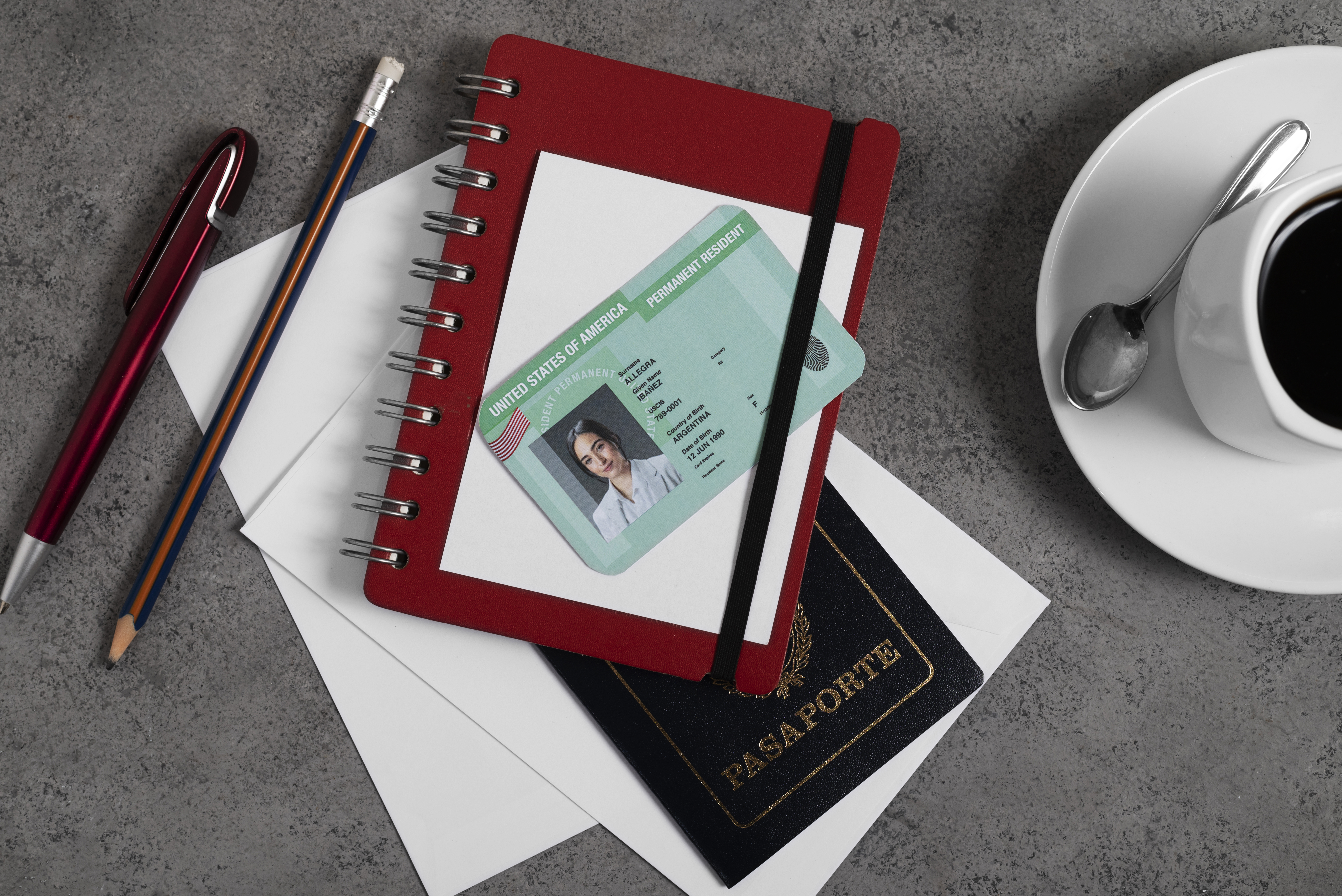
Some personal documents look straightforward. USCIS does not treat them that way.
If they are in another language, certified translations are required. This often includes birth certificates, national ID cards, household registration records, name change documents, and foreign passports, including biographic pages and annotations.
Educational records are sometimes requested as well. When that happens, certified translation services for academic transcripts must meet the same USCIS standards.
A birth certificate translation for green card renewal must include stamps, seals, signatures, and notes. Translating only the main text is a common and costly mistake in immigration document translation renewal cases.
Civil Documents Commonly Requested During Green Card Renewal
Civil records often appear later in the process. Marriage certificate translation in USCIS renewal cases is especially common when the original green card was marriage-based, when a divorce or remarriage occurred, or when USCIS requests verification during review.
Divorce decrees, death certificates, and adoption records may also be requested. Each must be translated in full and certified. Summaries are not accepted.
The role of certified translation in a successful USCIS application becomes most visible with civil documents, where even small inconsistencies matter.
Supporting Legal and Immigration Records Requiring Translation
USCIS may also request older or unexpected records.
These can include prior immigration filings, foreign court decisions, police certificates, legal name change rulings, or employment authorization documents issued outside the United States.
Permanent resident card translation issues often arise here because applicants assume USCIS already has the information. But USCIS only relies on actual documentation, not assumptions.
Legal translation services experienced with immigration filings reduce this risk significantly.
Certified Translation Standards Accepted by USCIS
What USCIS requires is certification, not notarization. A certified translation means that the document is complete and accurate, and the translator is competent for the job. Missing any part invalidates the submission.
Machine translations fail without certification, even when the English appears accurate. The translator competency certification for USCIS submissions is a crucial thing for document acceptance.
Providers like The Language Doctors work within USCIS standards from the start. That approach prevents avoidable RFEs later.
Common Translation Errors That Delay Green Card Renewal
Most delays are not caused by missing forms. They come from assumptions.
Applicants assume a stamp can be ignored. They assume a summary is enough. They assume a bilingual friend qualifies as a translator. USCIS does not make those assumptions.
Common errors include untranslated seals, uncertified online translations, inconsistent name spelling, missing diacritics that alter identity interpretation, missing certification statements, and partial translations.
Each mistake can trigger an RFE and that means that the clock stops.
How to avoid green card renewal delays due to translation is straightforward. You must treat translation as another legal requirement, not a side task.

How Professional Translation Prevents USCIS Rejections
Professional certified translation means understanding how files are reviewed by USCIS. In other words, experienced immigration translators know which details raise questions and where RFEs usually emerge.
They translate everything. They standardize names. They include proper certification language. They format documents the way USCIS expects to see them.
That is why professional certified translation prevents USCIS rejections. Not because the English sounds polished, but because the file leaves little room for doubt.
The Language Doctors provide certified translation services built specifically for USCIS filings. For applicants who need help beyond paperwork, USCIS interpreting services may be useful during interviews or follow-ups. For some cases, it also helps understand H-4 EAD processing time for 2025-2026, which certainly helps in application planning.
FAQ
You only need translation for non-English documents that you plan submitting to USCIS.
When a translation is complete and includes a signed statement that guarantees accuracy and translator’s competency, that’s a certified translation.
Yes, USCIS usually rejects poor or partial translations, and then they issue RFE.
No. Certification is required. Notarization is optional.
Most certified translations are completed within 24 to 72 hours, depending on document length.
Green card renewal delays are procedural and preventable. A clear green card renewal document translation checklist, combined with certified professionals who understand USCIS, can save months of waiting. That difference matters.
At The Language Doctors, we specialize in USCIS-certified translations that are trusted and accepted by immigration attorneys, government agencies, and embassies worldwide.
With our service, you can expect fast 24–48 hour turnaround times, certified translations in over 200 languages, and PDF delivery complete with a signed Certificate of Accuracy.
Everything you need to meet USCIS requirements with confidence. We offer affordable flat-rate pricing, so you always know what to expect with no hidden fees.
Get your USCIS translation today. Accurate, certified, and hassle-free.