
How to Translate ISO and Regulatory Documents for International Markets


TL;DR: ISO and regulatory documents are not ordinary text. A technical term can carry a very specific meaning, and a translation that sounds perfectly natural can still be wrong for the market where it will be used. The safest approach is to identify what actually needs translating, use the right terminology from the start, and review the finished documents against the requirements of each market.
Taking an ISO manual or regulatory file into another country is not a matter of throwing it into a translation tool and hoping for the best. These documents often contain language that has a very specific meaning within an industry or standard.
That is why ISO document translation needs more care than ordinary business translation. The finished version has to make sense to the people using it and still say exactly what the original says.
A document can sound polished and still cause trouble if a technical term is interpreted incorrectly. Unfortunately, regulators tend to care about what the document actually says rather than how impressive the translation sounds.

Why ISO and Regulatory Documents Require Specialized Translation
ISO documents are full of defined language. In many cases, a particular word is being used because the standard gives it a specific meaning, not because someone thought it sounded nice.
Regulatory material is even less forgiving. ISO standards translation requires familiarity with the terminology surrounding the relevant standard, while regulatory work demands an understanding of the rules that apply to the document.
That is why technical translation for global markets is a specialized job. Fluency is useful, but knowing when a familiar word has an entirely different technical meaning is what keeps the translation out of trouble.
Understanding the Scope of ISO Documentation
An ISO project can be much bigger than the standard itself. A company may have procedures, internal manuals, forms, work instructions, and records tied to its certification or quality system.
Before starting, determine which documents actually need to travel into the new market. There is little value in translating a stack of files that nobody will ever use.
It also helps to identify references to specific standards before translation begins. Translation for international standards works better when the translator knows which standard the document follows instead of discovering that information halfway through the project.
Identifying Which Regulatory Documents Need Translation
Not every document needs to be translated just because a company is entering another country. The requirement usually comes from the regulator, certification body, customer, or local partner involved.
Start with the documents that will actually be submitted or relied upon. Depending on the market, that could include product documentation, compliance records, declarations, technical files, or instructions.
Creating translated regulatory documents simply because “everything should be translated” can waste a surprising amount of time. First figure out what the market actually requires. Then translate that material properly.
Establishing a Clear Translation Strategy for Global Compliance

A good translation project starts with a boring question that saves a lot of exciting problems later: Where is this document going?
The answer affects terminology, language, formatting, and sometimes certification. A company working in several countries may need different versions rather than one supposedly universal document.
That becomes especially important with international compliance translation. The goal is not merely to produce readable text. The translation needs to fit the compliance environment in which it will be used.
Choosing Qualified Translators with Regulatory Expertise
A person can be an excellent translator and still be the wrong translator for a regulatory project. Experience with the subject matter matters because technical terminology does not always behave the way ordinary language does.
Look for someone who has worked with the relevant industry or type of documentation. A translator familiar with pharmaceutical regulations, for example, will approach a technical file differently from someone who mainly translates general business material.
The same goes for choosing regulatory translation services. Ask what kind of regulatory work the provider has actually handled rather than relying on a broad claim that they cover every language and industry.
Maintaining Consistent Terminology Across Multiple Languages

The more languages involved, the easier it is for terminology to drift. A technical term might be translated one way in French and slightly differently in German, even though both versions are supposed to mean the same thing.
That’s where an approved glossary earns its keep. It tells every translator which terms to use, so the wording stays consistent instead of changing from one version to the next.
This is particularly useful for multilingual regulatory compliance, where several language versions may be reviewed side by side.
Consistency also makes future updates easier. Nobody wants to rebuild the translation strategy every time one paragraph changes.
Ensuring Accuracy Through Multi-Step Review Processes
A first translation is not the finish line. Someone should review the work against the source document before it is released.
That review should look beyond spelling. Technical meaning, terminology, numbers, references, and document structure all deserve attention.
For certified regulatory translation, the review is especially important because the final document may be submitted to an authority that has little interest in hearing that an error was just a translation issue.
Adapting Documents to Local Regulatory Requirements
Translation and localization are not always the same job. A document can be translated correctly and still fail to account for a requirement in the target market.
Local rules can change the terminology you use or even how certain information needs to appear in the document. The translator needs to know those expectations before the final version is prepared.
This is where global market document translation needs more than a dictionary. The document has to work in the market where it will actually be used.
Managing Version Control and Document Updates
Regulatory documents rarely sit still. A standard changes, a company updates a procedure, or someone discovers that version 7.2 somehow became version 7.2-final-final.
A proper version-control system keeps the translated document tied to the correct source. When the original changes, the team can identify what needs updating instead of wondering which translation is the current one.
That becomes increasingly important when documents exist in several languages. One outdated version can easily hide among otherwise current files.
Protecting Confidentiality and Data Security During Translation
Regulatory files may contain proprietary information, product details, or internal procedures that should not be wandering around the internet.
For that reason, companies should know how their translation provider handles confidential files. Secure file transfer and controlled access are basic expectations for sensitive projects.
The same care should apply throughout the project, not just when the documents are first uploaded. A secure translation process should remain secure until the finished files are delivered.
Common Mistakes to Avoid in Regulatory Translation
Literal translation is a common trap. It can produce sentences that look faithful to the original while quietly changing what a technical term means.
Translating a document before checking the rules in its target market can leave you with a polished translation that still needs to be changed. Regulations are not identical everywhere, so assuming one translation will satisfy every country can create unnecessary rework.
Ignoring document updates causes trouble, too. An excellent translation of an obsolete source document is still an obsolete translation.
The Role of Technology in Large-Scale Regulatory Translation Projects

Technology can be extremely useful when hundreds or thousands of pages are involved. Translation memory, terminology tools, and document-management systems can help teams work faster without repeatedly translating the same material from scratch.
Machine translation can also assist with certain stages of a large project. It should not, however, be treated as the final authority on specialized regulatory language.
Human review remains important when the wording carries technical or legal consequences. Technology is useful; letting a machine make the final call on a compliance document is a different conversation.
Building a Sustainable Workflow for Ongoing Compliance Translation
The smartest approach is to treat translation as an ongoing process rather than a giant project that gets buried in a folder once completed.
Keep source documents and translations linked by version. Maintain approved terminology as the company expands into new markets. If the original changes, the translation needs to be updated too. That keeps ISO document translation from turning into a mess of old and new versions, and makes it easy to see which document is actually current.
FAQ
ISO manuals, procedures, work instructions, and supporting quality documents are common candidates. The actual scope depends on where the documents will be used.
The terminology is too specialized for guesswork. A translator needs to understand the subject matter as well as the language.
Start with the current requirements for the country where the document will be used, then check the translation together with the source. That catches both regulatory issues and small wording changes that could alter the meaning.
Create approved terminology before the project gets too far along. That gives every translator the same reference point.
Update the translation when the original document changes or the rules around it are updated. You don’t need to redo it on a set schedule if nothing has changed.
It can be useful when you’re dealing with a large amount of text, but regulatory documents still need a qualified person to check the final translation. A machine can move through pages quickly, but it may miss a technical meaning that matters.
Don’t choose a translation provider based on language coverage alone. Check whether they have recognized quality credentials and real experience with the type of regulatory documents you’re dealing with. Familiarity with your industry’s terminology can make a big difference when a single technical term carries more weight than it seems.
Check the new version against the one you already have translated and see what changed. Replace the old sections with the new translation so you won’t have to redo the entire document.
Manufacturing, healthcare, pharmaceuticals, technology, and other highly regulated fields commonly need this type of translation.
There is no useful one-size-fits-all answer. The timeline depends on the volume, language combination, technical complexity, and review required.
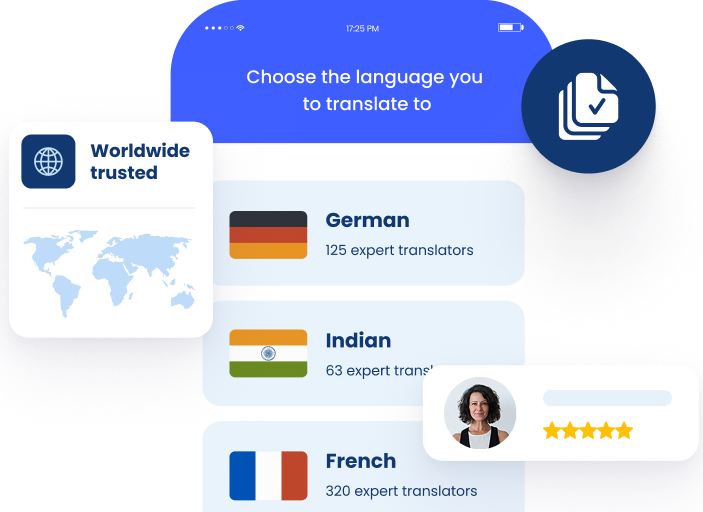
At The Language Doctors, we specialize in translation of ISO and regulatory documents for international markets, trusted by companies managing compliance across borders.
With our service, you can expect translators with real regulatory and industry expertise, approved glossaries that keep terminology consistent across every language, and multi-step review against the source before anything is released.
Everything you need to submit documents that say exactly what the original says in each market where they’ll be used. We adapt to local regulatory requirements, keep versions linked to their source and handle sensitive files through secure transfer from upload to delivery.
Get your ISO and regulatory translation quote today. Precise, compliant and built for global markets.