
Certified Translation of Birth Certificate for US Immigration


If your birth certificate is in another language, USCIS needs a complete English translation with a signed certification from the translator. A missing stamp or handwritten note can matter just as much as a name or date, so the entire document needs attention.
A birth certificate translation for USCIS is one of those small jobs that can hold up a much bigger immigration application. The document may be perfectly valid in its country of origin, but USCIS officers need to be able to read it in English.
A certified birth certificate translation includes the full document in English and a signed statement from the translator. USCIS needs this when you submit a birth certificate in another language. The translation must also include stamps and handwritten notes.

Why You Need a Certified Translation for Your Birth Certificate
Your birth certificate may be needed to prove your identity or show your relationship to a family member. If it is not in English, USCIS needs a translation before it can review the information.
USCIS requires certified English translations for all foreign-language documents
If you send USCIS a document in another language, you must include its full English translation. The translator also has to sign a statement confirming that the translation is complete and accurate and that they know both languages well enough to translate the document.
This applies to birth certificates issued in Spanish, French, Arabic, Mandarin, or any other language. An English summary will not do the job. USCIS needs the actual contents of the document, not someone’s interpretation of the most interesting parts.
Birth certificates establish identity, citizenship, and family relationships
A birth certificate shows your name, date and place of birth, and your parents’ names. USCIS uses this information to confirm your identity and, in some cases, your family relationships.
Names deserve particular care. Some countries use two surnames, different name orders, or spelling conventions that do not translate neatly into English. A good translation preserves the information as it appears on the original rather than trying to make every name look familiar to an American reader.
Required for green cards, visas, naturalization, and family petitions
An immigration birth certificate translation may be needed for a family petition, an adjustment of status application, or an immigrant visa case. It can also be requested in other immigration matters when the birth record is relevant to the applicant’s identity or family history.
The exact documents depend on the application and the circumstances. A birth certificate is common evidence, but it is not automatically required in every case. Check the instructions for your form and any document request USCIS has sent you.
Uncertified or machine-translated documents will be rejected
Google Translate can help you understand a menu or a message from your neighbor. Immigration paperwork is a less forgiving place to experiment. A machine-generated translation by itself does not meet USCIS’s certification requirement.
A translation that is incomplete or lacks the required certification may lead to a request for evidence, a delay, or problems with the submission. The safest approach is to have the document translated by a qualified person who can provide the required signed statement.
USCIS Requirements Under 8 CFR 103.2(b)(3)
The rule covering foreign-language documents is found in 8 CFR 103.2(b)(3). It is fairly direct: submit a full English translation, along with the translator’s certification that the translation is complete and accurate and that the translator is competent to translate from the original language into English.
Full English translation of the entire document
The translation must cover the whole birth certificate, not just the section containing the person’s name and date of birth. Stamps, seals, headings, registration details, and notes belong in the English version too.
This is where people sometimes get caught out. A mark on the back or a short handwritten note in the margin may look unimportant, but leaving it out means the translation is no longer complete.
Translator certification of accuracy and completeness
The translator has to confirm that the English version matches the original and that nothing has been left out. Simply marking a document as a “certified translation” is not enough.
The statement is usually added as a separate page to the translation, and you should include it when you submit the document to USCIS.
Certification of translator competence in both languages
The translator must prove they are competent to transalte the document in both languages. Someone translating a birth certificate from Spanish into English, for example, must be able to work confidently in both.
USCIS does not ask translators to hold a specific license or outside certification. They simply need to be qualified to do the work and willing to confirm it in writing.
Certification must be signed and dated
The translator must sign and date the certification. A statement without these details is incomplete. A typed name without a signature may leave the declaration incomplete, depending on how it is prepared.
Check that the signed statement is included in the file you receive. It is easy to focus on the translated certificate and overlook the page that makes it suitable for an immigration submission.
Both original and translation submitted together
The foreign-language birth certificate and its English translation should be submitted together. USCIS needs to see the source document as well as the translation, so the officer can compare them if necessary.
For an online application, follow the filing instructions for uploading the original-language document and its translation. Keep the pages together and make sure the scans are readable. A perfect translation is not much help if the original is missing.
What Must Be Included in the Translation
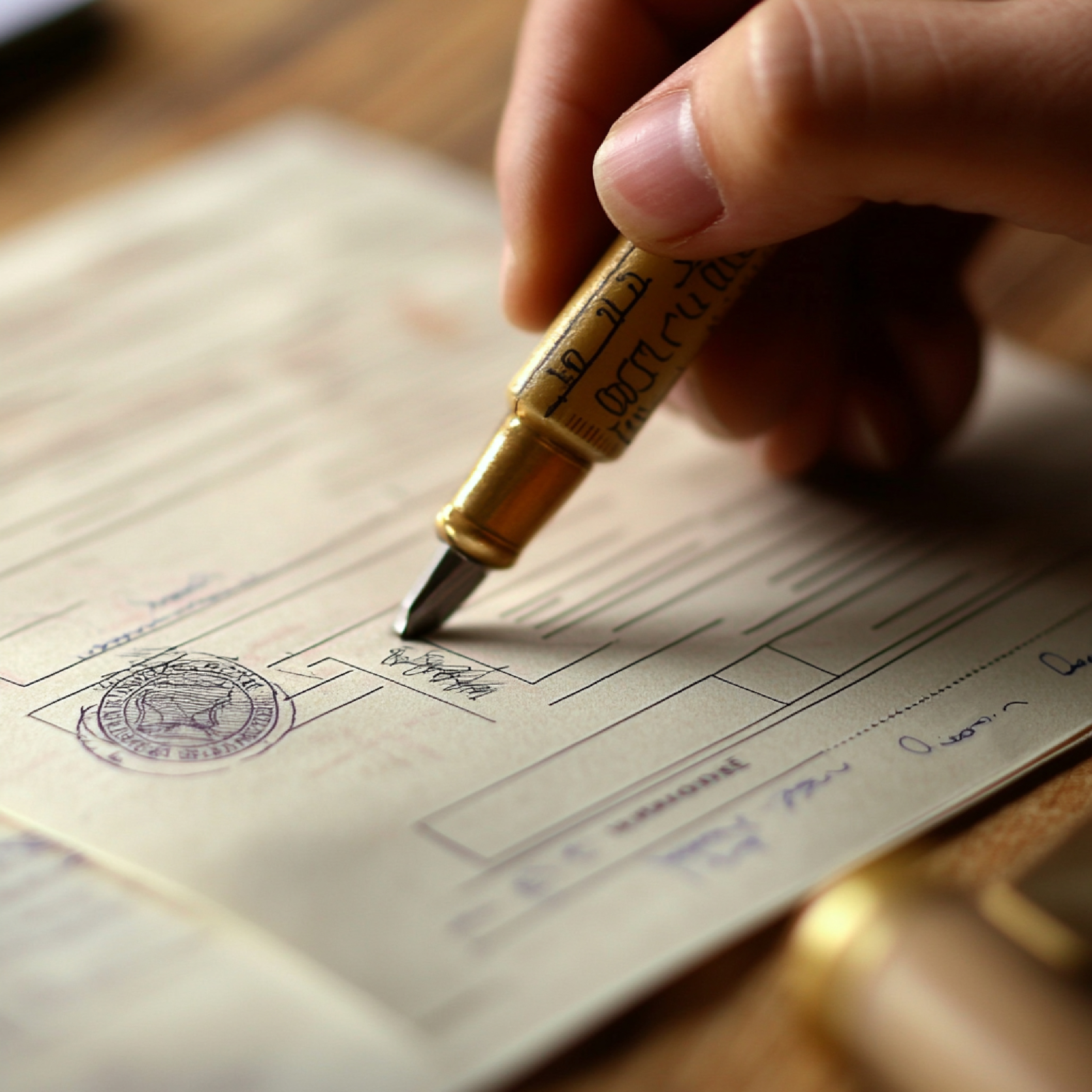
A birth certificate can contain more information than first meets the eye. Some records are printed on one page; others have stamps, handwritten entries, or additional notes on the reverse. The translator should work from the complete document.
Full name of the person named on the certificate
The person’s name should appear as it is written on the original certificate. Translators should not rearrange surnames or quietly correct spelling to match a passport without a reason.
If the birth certificate and passport use different spellings, that difference should not be hidden. It may be something to discuss with an immigration attorney, especially if the discrepancy appears in several records.
Date and place of birth
The translation must include the date and place of birth exactly as recorded. Date formats can vary between countries, so a translator needs to make the meaning clear in English without changing the underlying information.
For example, a date written as 04/07/2001 could mean April 7 or July 4, depending on the country. A translator familiar with the source document’s conventions can avoid an error that would be remarkably easy to make.
Parents' full names and details
If the certificate lists the parents, their names and any other recorded details must be translated. USCIS may look at the parents’ names to confirm a family relationship, especially in cases where one person is sponsoring a relative.
Some birth certificates also list the parents’ ages and nationalities, and if they exist in the original, they must be included in the translation too.
All stamps, seals, and official markings
Some birth certificates have seals and stamps with words on them, and they must be translated. A seal may contain the name of the relevant government office. Even if the wording seems repetitive, it should not simply disappear from the English version.
Signatures and handwritten annotations
Handwritten information can be difficult to read, particularly on older certificates. The translator should make a reasonable effort to decipher it and indicate when a word or section is illegible rather than inventing something that is not there.
Signatures may be identified as signatures if the names cannot be read. Handwritten corrections or additions should also be included when they form part of the official record.
Registration numbers and issuance information
A birth certificate may have a registration number or another reference number from the issuing office. These numbers must appear in the English translation exactly as they do on the original.
The certificate may also show when the birth was registered and when it was issued, and it’s important to know that these are not the same as the birth date, so each has to be translated.
Any marginal notes or additional text on the document
If a birth certificate has notes that were added later, they are also important. They must be included in the translation too. These might refer to an amendment, a name change, a later registration, or another official update.
They can be easy to miss when someone scans only the center of the page. A complete translation includes these notes, even when they take up only a few words.
The Certification Statement Explained
The certification statement is the part that confirms who translated the document and what they are declaring about their work. The certification is a brief declaration from the translator, but it needs to cover more than just the fact that a translation was done.
Statement that the translation is complete and accurate
The certification confirms that the English document matches the original birth certificate. Even a small note or entry on the page should not disappear from the translation.
Declaration that the translator is competent to translate
The statement must identify the original language and confirm that the person who prepared the English text is able to translate from that language. USCIS does not require a special translation license.
Translator's full name, signature, and date
The certification must be signed by the person who prepared the translation. Their full name and the date of signing must appear on it.
If an agency arranges the work, make sure the certification identifies the individual translator or otherwise clearly establishes who is making the declaration. A company logo alone is not a substitute for a signed certification.
Contact information for verification purposes
Including contact information makes it possible to reach the translator if a question arises. This may be an email address, telephone number, or business address.
USCIS does not list a particular contact-information format in the regulation, but providing a way to identify and contact the translator is sensible practice. It also makes the certification look like a proper document rather than a page someone added at the last minute.
Certification must be in English and signed
Because the translation is being submitted to an English-speaking agency, the certification should be written in English. It must include the required declaration and the translator’s signature.
Keep the certification attached to the translation when you submit the documents. Sending the translated birth certificate without its certification page defeats the purpose of having one.
Who Can Provide a Certified Translation
USCIS does not require every translator to hold a particular government license. The person translating the document must, however, be competent in both languages and willing to certify the work.
Professional translation agencies with USCIS experience
A professional agency can arrange the translation and provide the signed certification in the format needed for an immigration submission. This can be helpful if the birth certificate contains unfamiliar terminology or comes from a country with a different civil registration system.
An agency also gives you somewhere to turn if you notice a spelling issue or need a correction. That is preferable to trying to track down someone who translated the document as a favor six months ago.
Qualified bilingual translators with relevant expertise
An independent translator may also prepare the document, provided they meet the certification requirements. Being bilingual is a useful starting point, but it does not automatically make someone a good translator of official records.
Birth certificates often use formal language and country-specific terms. A translator who understands those conventions is less likely to mistake a registration entry for an issue date or misread an official abbreviation.
The applicant cannot translate their own document
The regulation does not expressly say that applicants are forbidden from translating their own documents. Still, using an independent translator is the safer choice.
When you are the person named on the certificate, you have an obvious personal interest in the application. Having someone else prepare and certify the translation avoids questions about impartiality and gives USCIS a separate person to contact if needed.
Family members and friends should not be used
A relative may speak both languages fluently, but that does not make them the best person to handle an immigration document. Family members can also be involved in the very relationships the birth certificate is being used to establish.
A friend might be perfectly capable of translating a conversation or helping with everyday paperwork. For an official submission, it is better to use someone who can provide a proper certification and take responsibility for the finished work.
Translation must be done by an independent third party
An independent translator provides a separate account of what the original document says. This is particularly useful if USCIS needs to compare the translation with other evidence in the application.
The translator should not change information to make it match another document. If a name or date differs from the applicant’s passport, the translation should preserve the birth certificate as written. Any explanation of the discrepancy belongs elsewhere in the application.
Documents That Require Birth Certificate Translation
A birth certificate may be requested in several types of immigration cases. The form itself does not always tell the whole story, so applicants should check the current instructions and the evidence required for their particular circumstances.
Form I-130 (Petition for Alien Relative)
A birth certificate may be used in an I-130 case to establish a qualifying family relationship. A U.S. citizen petitioning for a parent may need their own birth certificate to prove the family connection.
If it was issued in another language, the I-130 birth certificate translation must cover the entire record and include a signed certification.
Form I-485 (Application to Register Permanent Residence)
For a green card application, you’ll need an I-485 birth certificate translation if the original isn’t in English.
An I-485 birth certificate translation must include the full English version and the translator’s signed certification. Check the form instructions to see which documents you need to submit.
Form N-400 (Application for Naturalization)
You don’t automatically need to submit a birth certificate with every N-400 application. However, USCIS may ask for one if it needs to verify your personal information or review a detail in your immigration history. If you submit a foreign-language birth record with Form N-400, the N-400 birth certificate translation must include the full English translation and certification.
Form I-129F (Petition for Alien Fiancé(e))
A birth certificate may be relevant to a fiancé(e) petition when it is requested as evidence or needed to establish information about the petitioner or beneficiary. The exact supporting documents can vary.
If you include a foreign-language birth certificate, have it translated in full. Do not assume that a document is exempt from translation rules just because it is supporting evidence rather than the main form.
DS-260 (Immigrant Visa Application)
Applicants completing the DS-260 may need to provide civil documents, including birth certificates, as part of immigrant visa processing. The documents you need depend on the country where you’re applying and the instructions from the U.S. embassy or consulate handling your case.
If your birth certificate is in a language the embassy does not accept, you may need a birth certificate English translation. Check the embassy’s website before submitting your documents. Each location may have its own rules.
Asylum and refugee applications
An asylum application may ask for a birth certificate to establish your age or show who your family members are. If yours is in another language, submit an English translation with the required certification.
No birth certificate? Explain why you cannot get one. You may be able to use other records instead.

What If My Birth Certificate Is Missing or Incomplete
Maybe your country never issued you a birth certificate. Maybe the registry has no record of your birth, or the only copy you had was lost years ago. Whatever happened, don’t assume you cannot move forward with your immigration case. USCIS may consider other evidence, but you will need to explain why the birth certificate is unavailable.
USCIS accepts secondary evidence of birth
You can ask USCIS to consider other records if you cannot obtain a birth certificate. The first step is to explain why you don’t have it. You may also need a letter from the civil registry confirming that no record exists.
Affidavits from parents or older relatives
A person who knows about your birth firsthand may be able to write an affidavit. They should explain how they know the details, rather than simply repeat information they heard from someone else.
USCIS generally asks for affidavits from at least two people who are not involved in the petition. An immigration attorney can help you work out whether the people you have in mind meet that requirement.
Baptismal certificates or religious records
In some countries, a church kept the only record of a child’s birth or baptism. If that applies to you, an old baptismal certificate may be useful. It won’t automatically replace a civil birth certificate, but USCIS may consider it alongside your other evidence.This can be useful if the government did not issue birth certificates at the time.
USCIS will look at the document and the circumstances behind it. Be prepared to explain where the record came from and when it was created.
School records and medical documents
Old school records may show your date of birth. A hospital may still have a record from the day you were born, even if you no longer have a birth certificate. Old medical files can sometimes provide useful details for your case.
School records may also list your birth date, but that alone does not establish the actual date or place of birth. One record may not be enough on its own. The more useful question is whether the documents are reliable and support the same basic facts.
Government-issued ID with birth date
A national identity card or other government-issued document may show the person’s date of birth. It can support an application, although it may not establish every detail that a birth certificate would normally provide.
Submit it as part of the evidence requested for your case, not as an assumed replacement. If the document is in another language, it will also need a compliant English translation.
Consult an immigration attorney for guidance
Missing civil records can make an application more complicated, especially when the available documents contain different dates or spellings. An immigration attorney can review the situation and explain what evidence may be suitable.
This is worth doing before submitting a collection of unrelated papers and hoping one of them solves the problem. A little advice at the beginning can save a great deal of back-and-forth later.
Common Mistakes to Avoid
Most problems with a birth certificate translation are preventable. They often happen because someone rushes the process or assumes that a document is simple enough to handle casually.
Using Google Translate or machine translation
Google Translate may give you an idea of what your birth certificate says, but its output won’t meet USCIS requirements. You still need a human-prepared translation with a signed certification. It may also misread names, abbreviations, or official terminology.
Use it for your own understanding if you wish, but do not submit an unverified machine translation as the certified English version.
Submitting only part of the document
Translating the main section and ignoring the rest leaves USCIS with an incomplete record. The reverse side, margins, stamps, and handwritten additions may contain information that belongs in the translation.
Send the translator every page and side of the certificate. It is much easier to include everything at the start than to arrange a second translation after discovering that half the document was missing.
Missing the certification statement
A translation can be excellent and still fail to meet the submission requirements if the certification is missing. USCIS needs the translator’s declaration of accuracy and competence, not just the translated text.
Make sure the signed certification goes in with the translation when you submit your application.
Using a family member as translator
A relative may know the language, but USCIS could question a translation prepared by someone personally involved in your case. It’s safer to have someone outside the family handle it. They may also be unfamiliar with official terminology used on civil records.
An independent translator is a better option for an immigration submission. It keeps the translation separate from the applicant and the people involved in the case.
Submitting a blurry or incomplete scan
A translator cannot reliably work from text they cannot read. Faded printing, cropped edges, glare, and low-resolution images can make small details impossible to identify.
Before you send it, look at the file on your screen and zoom in. If any words are fuzzy or an edge of the certificate is cut off, take another picture.
Ignoring stamps, seals, or handwritten notes
A stamp from the registry office or a handwritten correction belongs in the translation too. Even if it looks like a minor detail, leave it out and the English copy won’t fully match the original.
If something is difficult to read, the translator should mark it as illegible rather than guess.
Failing to submit the original document with the translation
USCIS needs the foreign-language document alongside its English translation. Sending only the English version removes the source against which it can be checked.
For online filing, follow the upload instructions and keep the original and translation together. For paper applications, include both in the required format.

How to Prepare Your Birth Certificate for Translation
A little preparation makes the translation process easier. You do not need special equipment, but you do need a copy that shows the document as it actually is.
Obtain a clear, high-resolution copy
Scan the birth certificate if possible. A flatbed scanner usually produces a sharper image than a phone camera, especially when the certificate has small print or faded text.
If you only have a phone, use good lighting and place the document on a flat surface. Check the image before sending it. If you have to zoom in and still cannot read the text, the translator probably cannot either.
Ensure all text, stamps, and signatures are visible
Look over the whole page before uploading it. Make sure the edges have not been cut off and that stamps or signatures near the bottom are not hidden by a shadow.
Do not crop out details simply because they seem unrelated to the birth information. The translator needs to see the complete record.
Include both front and back of the document if applicable
Some birth certificates have official information printed or stamped on the reverse. Others have additional notes added later, so the back may be just as important as the front.
If there is anything on the reverse, include a copy of it. A blank back is less exciting, but it is still useful to know that the other side has been checked.
Avoid glare, shadows, or cropped edges
Glossy certificates can reflect light, making parts of the text disappear in a photograph. Shadows can have the same effect, particularly around the edges.
Take the picture straight on and move the light source if it creates a reflection. Check all four corners before sending the file.
Keep the original document safe and unaltered
Send a copy to the translator unless the service specifically needs to inspect the original. Do not write notes on the certificate or make changes to the document yourself.
Keep the original somewhere safe. You may need it later if an agency, embassy, or other authority asks to inspect it.
The Translation Process Step by Step
Once the document is ready, the process is usually straightforward. The important part is making sure the final file contains both the translation and the certification USCIS requires.
Upload or email a clear copy of your birth certificate
Send a readable copy of every page and side of the certificate. If you are unsure whether a stamp or handwritten note matters, include it anyway. The translator can decide how to handle it.
You should not need to explain every line yourself. Send the whole certificate, not just the section with your name and date of birth. If the country or language isn’t obvious, include that information too.
Receive a quote based on page count and language pair
The price will usually depend on the language, the number of pages, and the condition of the document. A short certificate in a common language may be quicker to process than an older record with difficult handwriting.
Ask what the quote includes. For an immigration submission, the certification should be part of the service rather than an unexpected extra at the end.
Professional translator completes the translation
The translator prepares the English version using the original certificate as the source. Names, dates, registry terms, and official notes need to be handled carefully because small differences can create confusion later.
If a word is genuinely unreadable, it should be identified as such. Guessing is not a translation method, however tempting it may be when the handwriting looks like it was written during an earthquake.
Independent reviewer checks for accuracy and completeness
A second review can catch a missed stamp, a transposed number, or a line that did not make it into the English version. This is particularly useful when the certificate has unusual formatting or older handwritten entries.
The reviewer compares the translation with the source document rather than simply reading the English text for grammar. Both matter, but only one tells you whether the original was represented correctly.
Certification statement is signed and attached
The translator provides a signed statement confirming that the translation is complete and accurate and that they are competent to translate from the original language into English.
The certification goes with the translated birth certificate with the translator’s signature and date.
Digital PDF delivered via email or secure portal
The finished translation and certification are sent in PDF format. You can save it with your other immigration documents and upload it according to the filing instructions.
If you need a printed copy, ask about that when placing the order. Keep a copy of the final version for your own records too.
Turnaround Times and Rush Options
Translation time depends on the language and the condition of the document. A clean, typed certificate is usually easier to handle than an old record with faded handwriting and several official notes.
Standard turnaround typically 1-3 business days
A standard birth certificate translation typically takes one to three business days. The exact timing depends on the language pair, document length, and whether any part of the certificate needs closer review.
If you have a filing deadline, mention it when requesting the quote. That gives the agency a chance to confirm whether the timing is realistic.
Rush services available for 24-hour delivery
A 24-hour service may be available when the document and language pair allow it. Rush availability should be confirmed before you place the order, rather than assumed because the deadline is approaching.
Send a clear copy and provide the date you need the translation to avoid delays.
Same-day options for urgent deadlines
Some urgent requests can be completed on the same day. Availability depends on the language, the time the document is received, and the amount of work involved.
If you need same-day delivery, ask first and wait for confirmation. It is better to know what can be done than to build your application schedule around a promise nobody has made.
Digital delivery is standard; printed copies available on request
Most translations are delivered electronically, which makes them easy to store and submit with an online application. The PDF should include the translation and its signed certification.
Printed copies may also be available if you need them for another purpose. Check the requirements of the agency or office receiving the document before ordering paper copies.
Plan ahead to avoid application delays
Do not leave the translation until the night before your filing deadline. Even a short certificate can take longer if the scan is poor or the language requires a specialist.
Allow time to review the finished document and ask for corrections if a name or date needs attention. It is much easier to fix a typo before submitting the application.
Notarization vs. Certification for USCIS
These two terms are often confused, but they do different jobs. For a standard USCIS birth certificate translation, certification is the important requirement.
USCIS does not require notarization for birth certificate translations
Under the general USCIS translation rule, a translator’s certification is required, but notarization is not. The translator does not normally need to appear before a notary simply to certify a birth certificate translation.
Some applicants pay for notarization because they assume it is part of the process. Unless another authority has asked for it, that extra step is generally unnecessary for USCIS.
Certification statement is sufficient for USCIS acceptance
The certification must confirm that the translation is complete and accurate and that the translator is competent to translate into English. It must also be signed by the translator.
That is what the regulation asks for. Notarizing a statement does not replace the required declaration, so make sure the certification itself contains the right information.
Notarization may be needed for other purposes (courts, some agencies)
A court, foreign government, university, or another institution may have its own rules. In those situations, notarization or a different form of authentication may be requested.
Do not assume that every organization follows USCIS requirements. Check with the office receiving the document before paying for an additional service.
Check specific requirements for your intended use
If the birth certificate will be used for more than one purpose, find out what each authority requires. A translation prepared for USCIS may not automatically meet the rules of a foreign registry or court.
Tell the translation provider where you plan to submit the document. That makes it easier to identify any additional requirements before the work begins.
Certification and notarization serve different purposes
Certification means the translator confirms that the translation is correct and that they know both languages. Notarization is different. It only confirms the identity of the person signing the document.
One does not automatically replace the other. For USCIS, focus on getting the required translator certification rather than ordering services you may not need.

How TLD Supports Birth Certificate Translation
A birth certificate may be only one page, but it deserves more attention than a quick copy-and-paste job. The Language Doctors provides certified translation services for immigration documents, with a process designed to make the finished paperwork easier to submit.
USCIS-accepted certified translations for all immigration applications
TLD prepares certified translations for documents submitted in U.S. immigration matters. Each translation includes a signed certification confirimg accuracy and validity.
USCIS makes the final decision on every application and supporting document. TLD’s role is to prepare the translation in line with the agency’s stated requirements.
Experienced translators for birth certificates in all major languages
TLD works with translators covering more than 200 languages. This is useful when a birth certificate comes from a country with unfamiliar civil registry terminology or uses a writing system that requires specialist knowledge.
The English translation should match the birth certificate as it appears in the original language. Even small notes added to the document later need to be included.
Fast turnaround with rush options for deadlines
A birth certificate translation takes one to three business days. If you need it sooner, TLD also offers 24-hour and same-day options for eligible requests.
Have an upcoming appointment or filing deadline? Mention it when you ask for a quote so the team can tell you how quickly they can complete your translation.
Signed certificates of accuracy included with every translation
You won’t need to look for someone else to certify the translation. TLD includes a signed statement with the finished document.
It confirms that the English version is complete and accurate and that the translator is qualified to translate from the original language.
Secure document handling and confidentiality
Your birth certificate has information you may not want circulating by email or sitting in the wrong hands. TLD handles these documents through secure file processes, from the moment you send them until your translation is delivered.
You can reach the team through TLD’s contact page or at hello@tldinc.org. Send a copy of the certificate, and they’ll get back to you with the price and expected delivery date.
FAQ:
If your birth certificate is in another language, you must submit a full English translation with a signed certification.
Use someone else to translate it. Having an independent person prepare the English copy avoids questions about your own translation.
It's the signed declaration that goes with the translation. It proves that the translator is competent and that the translation is complete and accurate.
The general USCIS rule requires a translator's certification, not notarization. A notary may be needed for another purpose, but it is not normally required for a birth certificate translation submitted to USCIS.
A standard translation typically takes one to three business days. Need it sooner? Ask TLD whether they can turn your document around that day. Availability depends on the language, so get a confirmed delivery date before sending payment.
You can request a translation from an agency that works with less common languages. TLD covers more than 200 languages and can check whether a qualified translator is available for your document.
Yes, if there is information on both sides. Any text, stamp, seal, or handwritten note that forms part of the certificate should be included. If the back is completely blank, there is no additional text to translate.
No birth certificate to submit? You may still have a way to prove your birth. USCIS can take a look at other records, but it depends on your case whether those are going to work or not. Check the rules for your application before sending anything.
No. Google Translate cannot provide the signed translator certification USCIS requires.
TLD translates birth certificates in more than 200 languages. Every completed translation comes with a signed certification, and standard delivery usually takes one to three business days. If you're working against a deadline, ask about faster delivery when you request a quote.
You can send a copy of your document through TLD's contact page to get started.
At The Language Doctors, we specialize in certified birth certificate translation for U.S. immigration – trusted by immigration applicants, families and attorneys to submit foreign birth records to USCIS without avoidable RFEs.
With our service, you can expect complete word-for-word translations that capture every stamp, seal and handwritten note, consistent spelling of names and dates across your whole filing, and a signed certification of accuracy in over 200 languages.
Everything you need to translate birth certificates and supporting civil records for green card, visa, K-1 and naturalization filings. We offer affordable flat-rate pricing and rush service for tight deadlines, so you always know what to expect with no hidden fees.
Get your certified birth certificate translation quote today. Certified, complete and ready to file.