
Why Pharmaceutical Companies Shouldn’t Rely on MT for Mandarin


While machine translation can produce polished Mandarin, it can get a regulatory term or dosage wrong. This is no minor language error for pharmaceutical content. Safety terms need to be human reviewed.
We know a machine can translate a sentence in seconds. But that does not mean the machine knows what the sentence is really saying.
In pharmaceutical work, a few words can change how someone uses a medicine. That is why Mandarin pharmaceutical translation is not just about getting natural-sounding Chinese. The information itself has to be right.
Machine translation can be useful when someone wants to quickly understand an ordinary document. The problem is that it can also produce very convincing mistakes. A sentence may sound completely normal in Mandarin, so nobody questions it, even though the original meaning has changed. That is where machine translation pharmaceutical risks become harder to ignore.

The Limits of Machine Translation in Pharmaceutical Work
Pharmaceutical documents are unforgiving. A translation can sound perfectly reasonable and still change the meaning of the source.
That is very important when the same terminology appears across documents that will be reviewed by healthcare professionals or patients.
Why fluent output does not always mean accurate content
Fluency can be deceptive. A machine may produce a sentence that reads smoothly in Mandarin but uses a medical term that is too broad or simply wrong for the context. A reader who does not know the source language may never notice.
This is one of the biggest problems with machine translation. Awkward wording is easy to spot. A polished error is much harder.
How machine translation predicts language instead of understanding clinical intent
Machine translation works by identifying patterns in language and predicting an appropriate output. It does not sit there considering what a clinical statement means or why a particular term was chosen.
That difference matters when the source contains medical abbreviations and instructions whose meaning depends on the surrounding text.
A human translator can stop and ask what the sentence is actually saying. A machine simply generates the most likely wording.
Why pharmaceutical documents require controlled precision
Pharmaceutical translation accuracy depends on much more than grammar.
The same term may need to remain consistent throughout a document set. Numbers have to survive the translation unchanged. Warnings need to retain their importance. A sentence describing a clinical endpoint cannot quietly become something slightly different because the machine found a more common expression.
Controlled language is not about making translation sound robotic. It is about making sure the wording behaves predictably where precision matters.
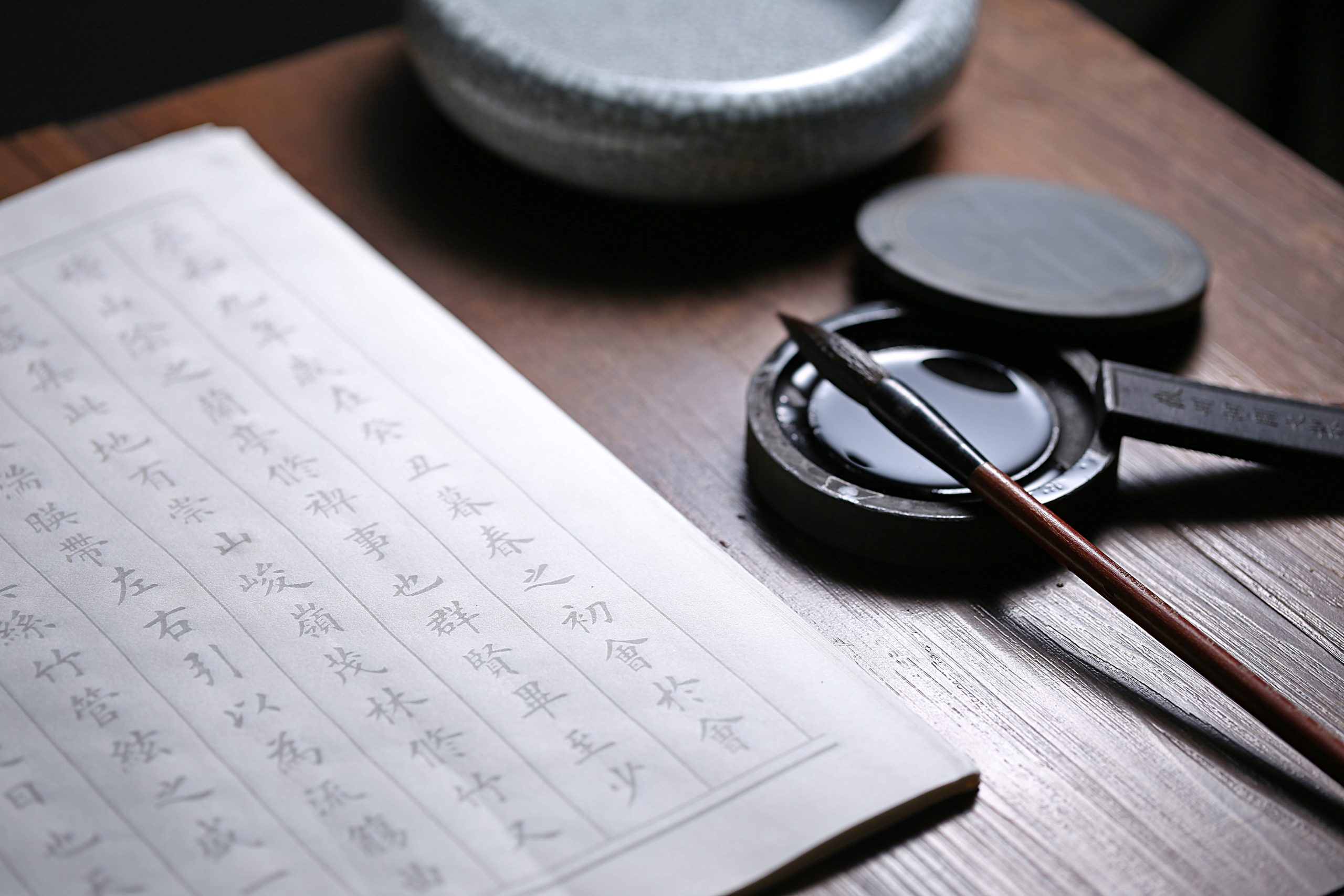
Mandarin Requires More Than Character Conversion
Chinese translation is not a matter of swapping one set of characters for another.
Pharmaceutical companies working across markets need to consider which form of Chinese is required, which terminology belongs in that market, and how the wording will be understood by its intended readers.
Differences between Simplified and Traditional Chinese
Simplified Chinese and Traditional Chinese are not interchangeable formats.
The character systems differ, but the issue goes further than appearance. Terminology and preferred expressions can also vary by market. A document prepared for mainland China may require different language choices from material intended for another Chinese-speaking market.
For regulatory content, simply converting characters can leave the document looking Chinese without making it appropriate for the intended market.
Regional terminology and market-specific language
Medical terminology is not always used in exactly the same way across Chinese-speaking regions.
A pharmaceutical translation intended for mainland China needs terminology that fits its regulatory and professional environment. This is particularly relevant for Simplified Chinese regulatory translation, where wording needs to fit the expectations of the relevant authorities rather than merely sound understandable.
The importance of context in Chinese medical communication
A term appearing in a clinical protocol may require wording that would sound unnecessarily technical in patient instructions. A regulatory statement may also require a more precise formulation than a general medical explanation.
The surrounding document tells a translator what the terminology is supposed to accomplish.
Why automated character conversion cannot replace localization
Character conversion changes characters. Localization considers the language around them.
That difference matters in Chinese medical translation because a document can contain technically correct characters while still using terminology that feels wrong for the market, audience, or purpose.
Pharmaceutical content needs localization decisions made by someone who understands the document, not just software that recognizes Chinese characters.
Risk 1: Incorrect Pharmaceutical Terminology
One of the easiest places for a machine translation to go wrong is terminology.
English medical terms may have more than one Chinese equivalent and the most common translation is not necessarily the correct one for a specific pharmaceutical document.
Multiple Chinese equivalents for one English medical term
One English word may have more than one possible Chinese translation.
The correct choice depends on if the document is a clinical protocol, regulatory submission, product label or patient-facing material. A generic translation engine may select words that are linguistically possible but that do not know which terminology has already been approved or established for the product.
Confusion between clinical, regulatory, and patient-facing vocabulary
A clinical document and a patient leaflet are for different audiences. A clinical term may need to remain accurate for health professionals to understand, but a patient leaflet may need to be in more simple language that is easier to understand without altering the actual meaning of the information. Regulatory language has its own conventions.
Using all three interchangeably can result in terminology that is either unnecessarily technical or vague.
Inconsistent translations of active ingredients and product names
Pay special attention to active ingredients and product names. A set of pharma documents may contain the same substance multiple times, abbreviated or referring to a brand name product.
If the words are different in the two documents the reviewers will have to decide if the difference is intentional or just a translation inconsistency. This problem can be avoided by a controlled terminology process.
Risk 2: Dosage and Measurement Errors
Numbers and creative translation are just not compatible.
A dosage or administration instruction has to survive the process intact. Even a small difference in formatting can be enough to investigate.
Misinterpretation of units, concentrations, and decimal points
Serious problems can arise from casual handling of units and decimal points.
Here the translator needs to differentiate between the number itself and the expression of the measurement. Concentrations may also be expressed in forms that require careful interpretation rather than automatic conversion.
That’s why pharmaceutical translation accuracy isn’t only about linguistic review, but numerical review too.
Confusion involving frequency, timing, and routes of administration
Instructions on when and how a medicine is administered convey practical meaning. A frequency-describing phrase cannot be translated as a general timing suggestion. Similarly, a route of administration needs to be specific. Words that sound close enough in everyday conversation may not be close enough in a pharmaceutical setting.
Why one numerical error can create a serious safety issue
One wrong number can change the meaning of an entire instruction. That is why numbers should be checked separately no matter how the rest of the sentence looks. Human review should confirm the figures against the source before the document is approved.
Risk 3: Missing or Altered Safety Information
Safety language needs extra care because small changes in wording can change the seriousness with which a reader interprets a risk.
MT systems might dilute or modify the real instruction, while maintaining the overall topic.
Omitted warnings and precautions
Instructions have to work as instructions. A word-for-word translation can make a simple step hard to follow in Korean. The translator may need to change the sentence order or wording so that it reads normally.
After doing that, the instruction needs to be checked against the English again. The user should still be told to do exactly the same thing.
Translating warnings, precautions, and contraindications
If warnings are missed or shortened that changes their relationship to the rest of the sentence.
A missing phrase is not only a translation issue when that phrase informs the reader about a potential risk, and that’s why they require special attention.
Weakened language for contraindications and adverse reactions
Contraindications and adverse reactions need precise wording. A machine may choose a softer or more general expression because it is more common. That can make the sentence sound natural but reduce its pharmaceutical meaning.
Changes in the meaning of risk statements
Risk statements also depend on careful wording. Changing a qualifier or degree of certainty can make a statement sound stronger or weaker than the source. The difference may be only a few words, but those words can change someone’s life.
Why safety content requires line-by-line review
Safety content needs to be compared with the source.
A reviewer needs to check what was translated and what was preserved. This is not the part of a pharmaceutical document where “close enough” is a useful standard.
Risk 4: Weak Understanding of Regulatory Context
Regulatory translation is not simply commercial translation with more technical vocabulary.
The document has a specific purpose, and its terminology needs to fit the regulatory environment in which it will be submitted or reviewed.
Differences between commercial translation and regulatory translation
Marketing material may prioritize readability and persuasion. Regulatory material has a different job.
A regulatory translation needs to communicate the source faithfully and consistently within the relevant submission framework. That makes terminology choices particularly important.
Terminology used in Chinese pharmaceutical submissions
Chinese pharmaceutical submissions may contain terminology that has an established regulatory meaning.
NMPA translation services therefore require more than general Chinese language ability. Translators working on submission materials need to understand the terminology and conventions relevant to the Chinese pharmaceutical market.
Maintaining consistency across dossiers, labels, and clinical documents
A product rarely exists in one document. The same information can appear across a dossier, label, clinical document, or supporting material. If a key term changes from one file to another, the difference can create unnecessary questions.
A consistent terminology system keeps those documents connected.
How inconsistent language can complicate regulatory review
Regulatory reviewers should not have to wonder whether two different terms refer to the same thing.
Inconsistent wording can slow review and create additional work when terminology needs to be clarified. Consistency does not solve every regulatory issue, but inconsistency certainly does not help.
Risk 5: Problems With Clinical Trial Documents
Clinical trial translation requires particular care because the documents guide real people through a defined research process.
A translation that sounds natural but changes a criterion or instruction can create confusion where there should be none.
Translating protocols, investigator brochures, and consent forms
Clinical trial documents contain specialized terminology and carefully defined instructions.
Mandarin clinical trial translation covers a range of documents, from protocols and investigator brochures to the consent forms participants sign. Each one has to keep its original structure and meaning, and the technical wording can’t drift into something a reader could take two ways.
Preserving inclusion, exclusion, and safety criteria
Eligibility criteria need to be specific. If an inclusion or exclusion condition becomes broader or narrower in translation, the meaning of the trial requirement can change. Safety criteria deserve the same level of attention.
Avoiding ambiguity in patient instructions and trial procedures
Trial participants may need to follow instructions precisely.
A sentence that is vague in the translated document can create uncertainty about what a participant is actually expected to do. Patient-facing instructions should be understandable without becoming less precise.
Protecting the meaning of endpoints and statistical terminology
Clinical endpoints and statistical terms carry defined meanings. They should not be replaced with everyday wording simply because it sounds more natural. A translator needs to understand what the term means within the study before deciding how to render it in Mandarin.
Risk 6: Patient Communication Can Lose Its Meaning
The language of pharmaceuticals is usually written by people who are already experts in the field. Patients are coming to it from a very different environment.They may open a leaflet because they have just been prescribed a new medicine and they want to know how to take it, what to look for or when to call their doctor. And a translation can be medically accurate, and still make those answers needlessly hard to find.
This is one of the harder parts of Chinese medical translation. The Mandarin has to stay faithful to the medical information, but it also has to make sense to the person who will actually use it.
Translating medical language into clear patient-friendly Mandarin
You can’t just drop the medical terminology because it looks complicated. Sometimes the technical term is important and should be retained. But there are also cases where an English medical expression becomes awkward or too difficult when translated too literally into Mandarin.
The translator may clarify the wording without changing the message. If a patient can understand the instruction in a single sentence, there is no reason to make them work through language that sounds as if it might have come out of a clinical report.
Accounting for health literacy and cultural expectations
Patient information is often written with assumptions that nobody notices until the document reaches a different audience. An instruction may refer to a procedure without explaining what it involves, or use an expression that feels perfectly ordinary in English but becomes vague when translated directly into Mandarin.
The translator has to notice those moments. The answer is not to add explanations that were never in the original, but neither is it helpful to preserve awkward wording simply because it follows the English closely. If something is likely to confuse the reader, it can be flagged and dealt with before the material reaches patients.
Avoiding unnatural or confusing instructions
Machine-translated Mandarin can be grammatically correct and still take a second or third reading to understand. With medication instructions, that hesitation matters. The patient may be trying to work out whether something should happen before a dose, after it, or only under a particular condition.
A human translator can rearrange the sentence into the way the instruction would normally be expressed in Mandarin, then compare it with the English again to make sure the meaning has stayed put. The finished sentence may look quite different from the source sentence. That is fine if it tells the patient the same thing more clearly.
Confirming that patients understand critical directions
Reading the Chinese and deciding that it sounds natural is not always enough. For important directions, it is worth reading them from the patient’s side of the page. Would someone who has never seen the English understand what to do, or does the sentence only seem obvious because the reviewer already knows what it means?
That distinction can expose wording that passed the first review without attracting attention. If a direction leaves reasonable room for the wrong interpretation, it needs another edit before it goes out.
Risk 7: Confidentiality and Data Security Concerns
Using an online translator feels almost casual. Open the page, paste the text, get the translation. That changes when the text comes from a pharmaceutical file that was never meant to be public.
The question is not whether online translation tools are automatically unsafe. Different systems handle data differently. The problem is using one without knowing what happens to the material after it has been submitted.
What happens when sensitive documents enter public translation platforms
Before someone uploads a confidential file, they need to know how that particular platform handles it. The answer is in the service’s actual data terms, not in how familiar or convenient the translation tool feels.
This is easy to overlook when someone only wants to translate a paragraph quickly. But a paragraph copied from an internal pharmaceutical document is still part of that document. Putting only a small piece of it into a public tool does not automatically make the information non-confidential.
Protecting clinical, patient, and proprietary pharmaceutical information
Not every pharmaceutical document contains the same kind of sensitive information. One file may include details about a product that has not been released yet. Another may contain information connected with clinical participants.
The translation process has to respect whatever restrictions already apply to that material. Needing the document in Mandarin does not change who is allowed to see it or where the information is allowed to go. That needs to be decided before files start moving between translators or translation systems.
Using secure workflows for confidential translation projects
For a confidential project, everyone involved should know how the files are being shared and where the working copies are kept. Access should stay with the people who actually need the material, using systems the company has approved for that type of document.
This does not need to turn translation into an IT project. It simply means treating the translated file with the same care as the original instead of relaxing the rules because the document has temporarily left the pharmaceutical team and landed with a language provider.
Risk 8: Machine Translation Cannot Take Responsibility
The biggest problem with using MT for high-risk pharmaceutical material comes when you have an unclear source. The machine will still give you a translation. It won’ stop the project and ask what the writer actually meant.
Someone has to make that call, and for important documents, you want to know who that someone was.
No professional judgment when the source text is ambiguous
Pharmaceutical documents are not always perfectly written. A sentence can be vague in English before translation even begins.
An experienced translator will notice when the wording does not quite add up. Instead of choosing whichever interpretation seems most likely, they can check the rest of the document or ask for clarification. MT does not know when a question needs to be asked. It simply produces an answer.
No accountable expert behind the final wording
If somebody questions a translation later, the company needs more than a finished Chinese file.
There should be a person who can explain why a term was chosen and confirm that the translation was checked against the source. With raw machine output, there is nobody behind that decision. The words are there, but the professional judgment isn’t.
Why audit trails and approval records matter in pharmaceutical work
Pharmaceutical documents often pass through several versions before anyone calls them final. A sentence gets corrected, terminology is updated, or a reviewer asks for a change.
Those changes need to be visible. If a question comes up later, the team should be able to go back and see which version was approved and who reviewed it. Raw MT gives you text, but it does not give you that history or the person responsible for signing off on it.
When Machine Translation May Be Used Carefully
That doesn’t mean MT has no place in pharmaceutical work. It does. The important part is knowing where it is useful and where you really don’t want it making the final call.
There are situations where it can be useful, provided its limitations are understood and the output is not mistaken for a final professional translation.
Internal comprehension of low-risk content
A team member may need a quick idea of what a document says.
For low-risk internal material, MT can sometimes provide a useful starting point. The important distinction is between understanding a document internally and approving it for professional or regulatory use.
Early drafts that will receive full expert review
Machine output can also serve as an early draft. If a qualified translator will review the entire text and make the necessary changes, MT can be one step in the workflow. It should not be the final quality-control stage.
Preliminary sorting of large document collections
Large document collections can be difficult to sort manually. MT may help teams identify which files appear relevant before professional translation begins. This can save time without placing the final linguistic decision in the hands of the machine.
Why unreviewed MT should not be used for high-risk materials
The dividing line is review. If a document affects patient safety, regulatory submission, dosing, consent, or critical medical information, unreviewed MT is a poor place to stop. The output may look finished long before it actually is.
A Safer Mandarin Translation Workflow
A good translation process starts before anyone translates the first sentence.
If a company already has Chinese terminology for the drug, that needs to be found. If several documents belong to the same study, they need to agree with each other. And once the translation is finished, the details that are easiest to overlook deserve another check.
Begin with a pharmaceutical terminology assessment
Start with the words that are going to keep coming back. Drug names are an obvious example, but a study may also have its own terms that appear throughout the material. Deciding how those will be handled at the beginning saves the translator from making the same decision over and over.
It also avoids an annoying problem later: discovering that one term has ended up with two or three different Chinese versions in the same project.
Create a controlled Chinese glossary and translation memory
Once a Chinese term has been agreed on, keep it.
A glossary gives everyone working on the project somewhere to check instead of relying on memory. Translation memory is useful when sentences or phrases from earlier documents appear again.
Neither needs to make the process complicated. They are simply ways of keeping earlier decisions from getting lost as more files come in.
Use translators with medical and regulatory expertise
A translator doesn’t need to sound like a doctor. They do need to understand what they are reading.
That includes noticing when the obvious Chinese translation doesn’t quite fit the sentence. It also means knowing that wording written for a patient may need to be handled differently from wording written for a regulator.
Sometimes the most useful skill is simply knowing when to stop and ask a question.
Complete bilingual review and independent proofreading
The Chinese should be checked with the English sitting right beside it.
Reading the Mandarin on its own can tell you whether it sounds natural. It cannot tell you that a short phrase from the English has disappeared or that a sentence now says something slightly different.
After that comparison, a final read can pick up the smaller things that are surprisingly easy to miss after staring at the same document for hours.
Validate numbers, units, warnings, and cross-document references
Then go back for the details that don’t deserve the benefit of the doubt.
Check the numbers against the original. Check the units too. Read warnings again instead of assuming they were covered during the general review. If the text refers the reader to another section or document, make sure it still points to the right place.
It isn’t the interesting part of the job, but it is often where an otherwise good translation gets caught doing something it shouldn’t.
Documents That Require Human Mandarin Review
Some pharmaceutical documents are simply too important to leave at the machine-output stage.
Human review is especially valuable when the content affects how a medicine is regulated, administered, studied, or understood.
Drug labels and package inserts
Drug labeling translation needs careful attention because the wording can directly affect how healthcare professionals and patients understand a product.
A label should not merely sound natural in Mandarin. Its warnings, directions, terminology, and other information need to match the source accurately.
Clinical trial protocols and informed consent forms
Protocols establish how a study is conducted, while consent forms explain important information to participants.
Both require careful review because ambiguity can affect the way clinical procedures or participant decisions are understood.
Regulatory dossiers and quality documentation
Regulatory documents need terminology that remains consistent throughout the submission.
A machine translation may be useful during internal preparation, but final regulatory documentation calls for qualified human review.
Pharmacovigilance and adverse-event reports
Safety reporting leaves little room for casual wording.
Pharmacovigilance materials need accurate descriptions of events and consistent terminology so that the information retains its intended meaning.
Patient information and medication instructions
Patient materials need to be understandable without becoming imprecise.
Instructions should be checked from the perspective of the intended Mandarin-speaking reader as well as against the original source.
Promotional and medical communications
Even promotional pharmaceutical content can contain medical claims that require careful handling.
The translation needs to preserve the intended meaning rather than making a claim sound stronger simply because a particular Mandarin expression is more natural.

How TLD Supports Mandarin Pharmaceutical Translation
Pharmaceutical translation needs someone to notice when a sentence doesn’t quite work, even if it looks fine at first glance. A drug name may have been translated differently on another page, or a short instruction may sound much less clear in Mandarin than it did in English. These are small things on paper, but they are exactly the sort of things worth catching.
The Language Doctors works with pharmaceutical content that needs this closer attention, particularly when the translation will be read by patients or used as part of official documentation.
Human translation for regulated pharmaceutical content
A human translator doesn’t have to accept the first translation that seems to fit.
They can go back, read the sentence again, and look at what comes before it. If a term sounds wrong in Mandarin, they can change it. If the English itself isn’t clear, they can flag it instead of making a guess and moving on.
That extra bit of judgment matters when the finished translation is going to be used for something more important than simply understanding the general idea.
For regulated content, that human judgment is an important part of the process.
Simplified and Traditional Chinese language support
Pharmaceutical companies may need Chinese for different markets and audiences.
Supporting both Simplified and Traditional Chinese allows the translation workflow to account for the intended market instead of treating Chinese as one interchangeable format.
Terminology management across clinical and regulatory documents
A consistent terminology system helps connect related documents.
That is particularly useful when a pharmaceutical product appears across clinical materials, regulatory documents, labeling, and patient information.
Multi-stage review for accuracy, consistency, and confidentiality
Human review gives important documents more than one checkpoint.
TLD can support a workflow in which pharmaceutical content is translated and reviewed with attention to terminology, document consistency, and confidential handling.
FAQ:
It can be used for low-risk internal purposes or as a draft, but high-risk pharmaceutical documents need qualified human review.
Pharmaceutical Mandarin has to preserve medical meaning, terminology, numbers, and regulatory context. Fluency alone is not enough.
The character systems differ, and terminology can vary by market. A pharmaceutical document needs the Chinese form and language appropriate for its intended audience.
It may translate them correctly, but it cannot be relied on to do so consistently. These details need human verification.
MT should not be treated as the final translation for informed consent forms. The wording needs careful human review because participants rely on it to understand important information.
Start with controlled terminology and use qualified translators. Critical information should then receive bilingual review.
Human post-editing means a professional reviews and corrects machine-generated translation. It can be useful, but regulatory documents may require more extensive human translation and review than simple MT post-editing.
It keeps important terms consistent across documents. That makes large pharmaceutical document sets easier to review and reduces avoidable inconsistencies.
Companies should not assume that a public translation platform is appropriate for confidential pharmaceutical material. Security and data-handling practices need to be evaluated before sensitive documents are uploaded.
TLD is designed to facilitate human review, with a focus on pharmaceutical terminology, accuracy, consistency and intended Chinese market. The degree of review can be adapted to the document and its purpose.
At The Language Doctors, we work with native subject-matter experts across 200+ languages, including Norwegian, trusted for certified document translation.
With our service, you can expect translators who understand the subject as well as the language, certified translation for Norwegian contracts, healthcare and immigration documents, and wording handled for what it means in context, not just what it looks like on the page.
Everything you need for the moments where “easy to learn” is not the same as “easy to translate” and a legal or medical term carries a very specific meaning. We connect you with qualified professionals who understand the terminology and certification requirements involved.
Get your free Norwegian translation consultation today. Accurate, certified and built for official documents.