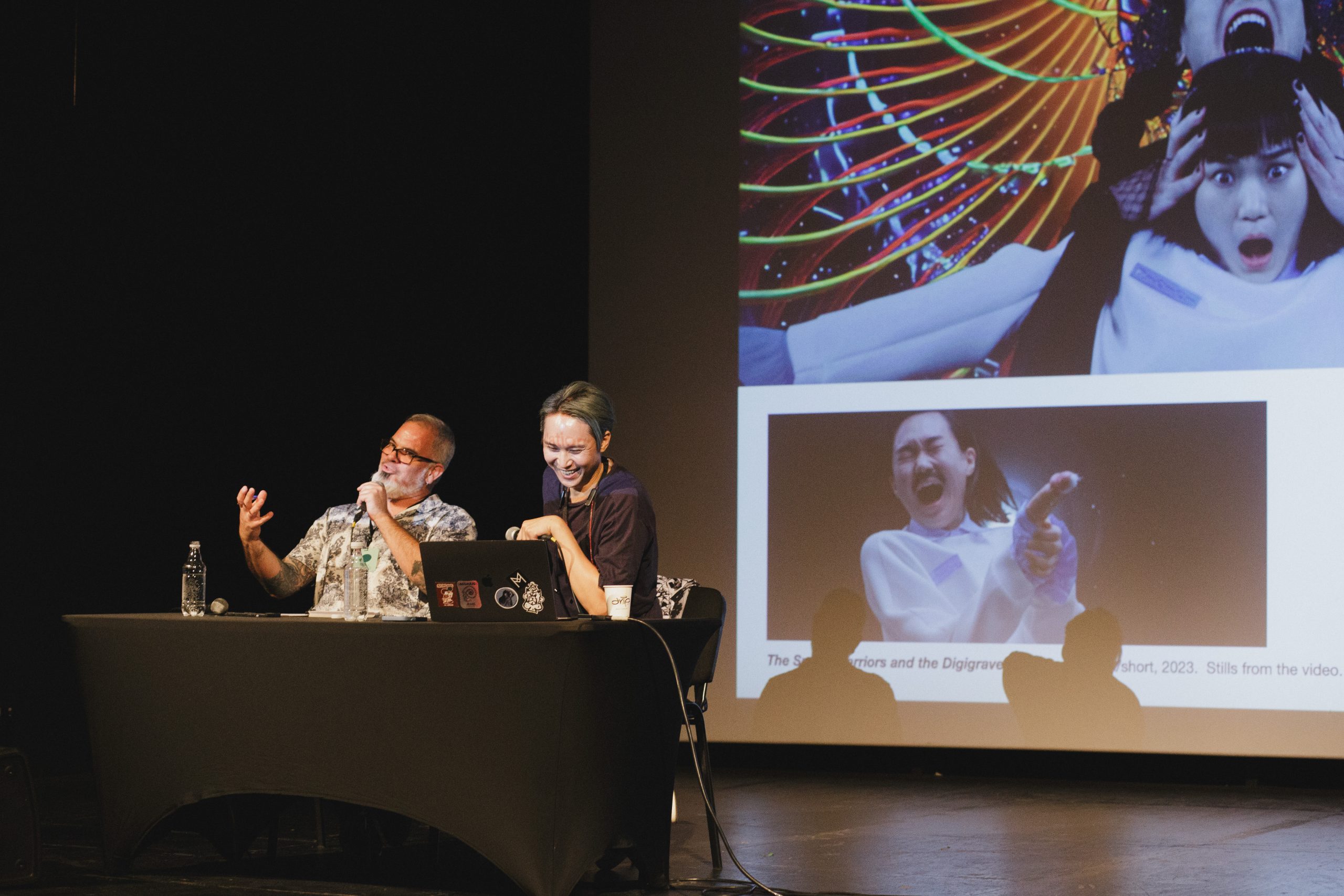
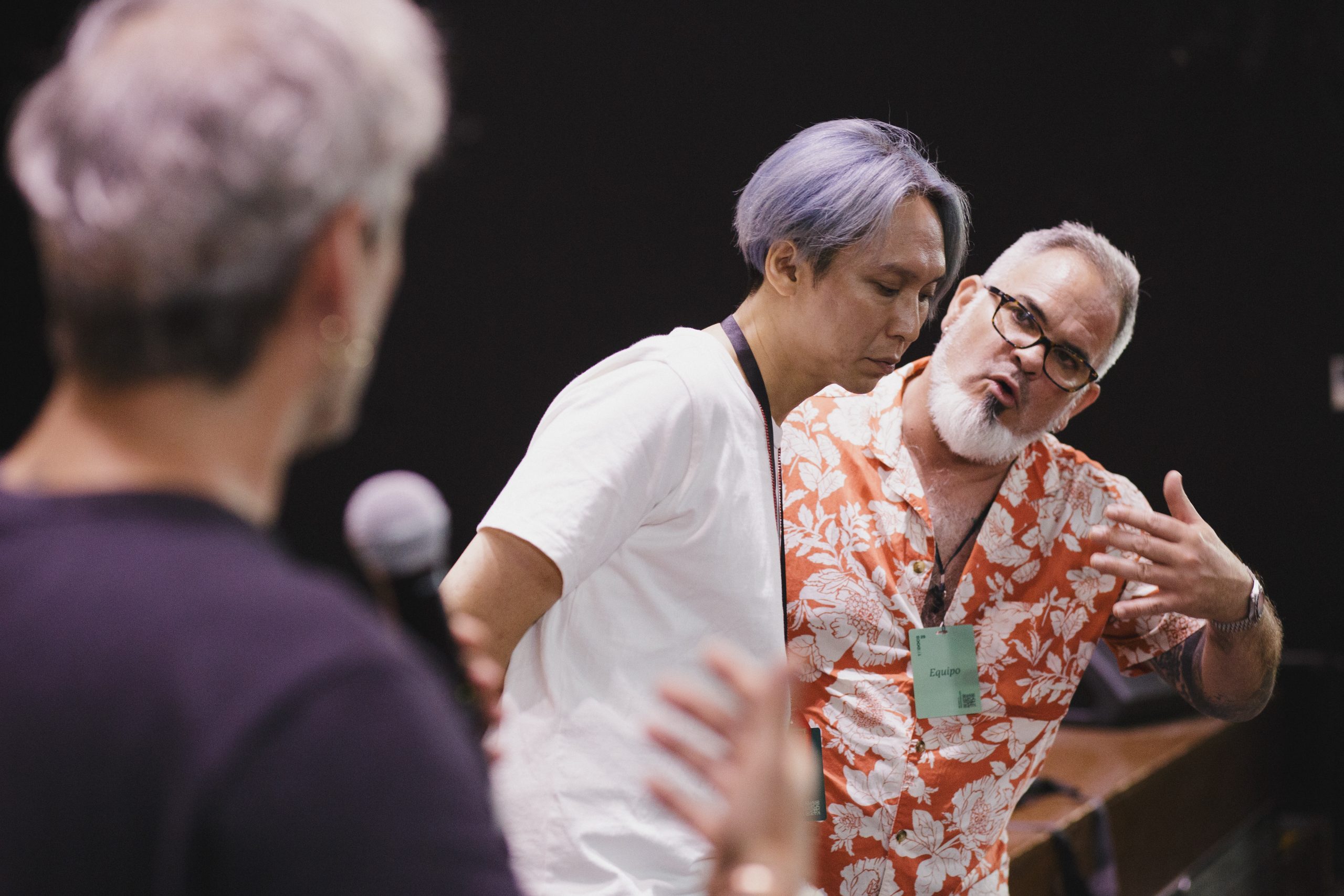
I was once lead interpreter for Santiago a Mil, which meant I was putting together the team. One interpreter showed up to work wearing a tank top. I had to pull him aside. The weather in Santiago in January is hot, and nobody expects a suit, but there is still a professional standard. Shorts and a T-shirt, yes. Tank top, no.
The Smithsonian work has been very different and very rewarding. One of my big interests is Indigenous cultures and history. I listen to a lot of history podcasts. When the Language Doctors gave me the opportunity to be one of the simultaneous interpreters for remote sessions with the Smithsonian, I jumped at it.
This is in the context of a program called Cultural Heritage Forward, where different museums within the Smithsonian Institution work with First Nations communities from around the world. I interpret for people in Peru and in Chile, including Easter Island, the north of Chile, and the south of Chile, all of which represent very different Indigenous cultures. There are other interpreters working with people from Africa, Asia, and elsewhere, paired with professionals from the National Museum of the American Indian, the National Museum of African American History and Culture, and other Smithsonian museums.
The work focuses on establishing relationships and talking about shared stewardship. The collections in the Smithsonian come from all over the world, and many were collected during times of colonialism. The current view of people working within museums is more of an anti-colonial, restorative-history approach. They are trying to create relationships with the communities from where these collections come, take their point of view on how to display objects, and in some cases discuss repatriation and cultural exchanges.
A month ago, the Chilean-Peruvian cohort traveled to Washington DC, visited the collections, saw sacred objects that belong to their specific traditions, and spoke about what shared stewardship could look like. It is an interesting and beautiful thing to be part of.
The Craft of Consecutive and Simultaneous Interpretation
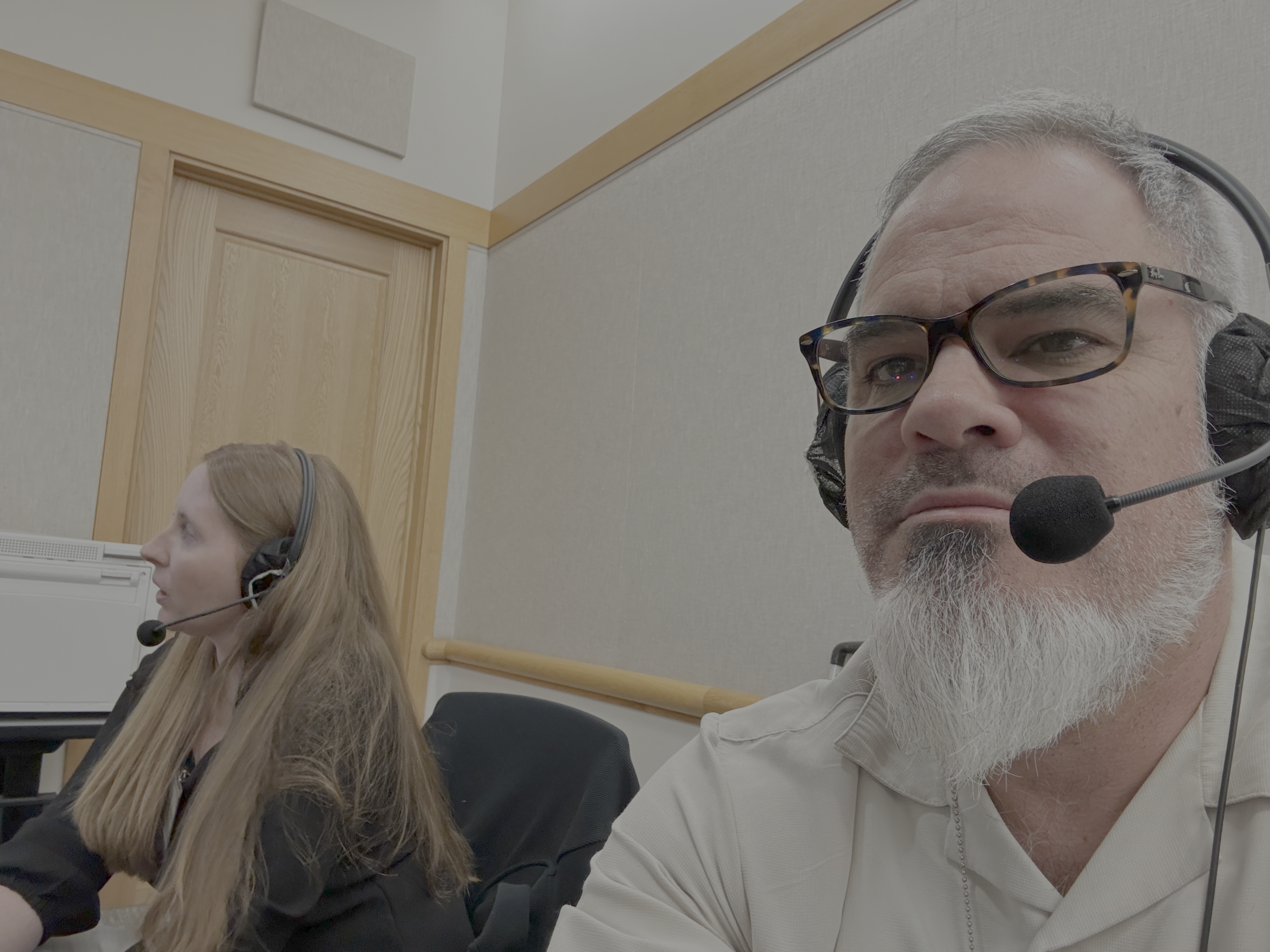
Consecutive interpretation is when the speaker says a few sentences, pauses, and the interpreter conveys those sentences in the other language before the speaker continues. Simultaneous interpretation is when the interpreter speaks at nearly the same time as the speaker, usually from inside a booth with headphones on.
The two require different skills. In simultaneous interpretation, you cannot stop to ask a question. You have to prepare more thoroughly beforehand because once you are in the booth, you have no fallback. In consecutive interpretation, you have more room to clarify, pause, and ask the speaker to explain something if you need to.
For consecutive interpretation, memory is critical. When I am listening to a speaker, my hand is often next to my leg and I am counting their points. One, two, three. Those are the points I need to carry across. People sometimes say they cannot believe I remembered all of that. It is a skill you build through practice, and it is important to cultivate.
For simultaneous interpretation, I use what I can only describe as a meditative state. Simultaneous interpretation is a kind of trance. You have to stop your brain and let the words flow in through the ear and out through the mouth, in through the ear and out through the mouth. You really do not have time to think. If I come across a word where I do not know the specific translation right away, I cannot stop and think about it. I would lose the train. So I paraphrase it, convey the information in a different way, and keep going. Even if the exact term is not the most precise rendering, the information gets across.
Being brave matters, especially on stage. I once invited a recently graduated interpreter to join a team I was putting together. She needed to do consecutive interpretation up on stage. That freaked her out. She came up on stage holding a notepad and a microphone, trying to take notes on something that was happening live right in front of her. You do not have time to take notes on stage. Grab the microphone and go. You have to not be afraid of being ridiculous sometimes or making mistakes and laughing at them. There is a roller coaster quality to the work, and you have to know how to navigate it.
Working With Different Dialects and Registers
Chile has a particular way of speaking Spanish, with its own conjugations and vocabulary. When I interpret for a Chilean audience, there is a certain amount of localization that happens, especially in informal settings like film festivals. In more formal settings like a US Secretary of Commerce visit, which I have interpreted for, there is no alternative to very proper Spanish.
The same principle applies in reverse when I am teaching English. My partner and I run an English studio in Chile and work mostly with adults because they are the most motivated students. We work with professionals who need English for their work. Recently I was helping a lawyer with the word compromiso, which is a false cognate. It does not mean compromise. It means commitment. Pointing out those kinds of patterns is a big part of what makes the work interesting. You would think that word is the same in both languages. It is not.
The Emotional Dimension of Medical and Legal Interpretation
The reward of interpretation depends a lot on the setting. The corporate work, the IT development meetings, those are not emotionally charged. But medical interpretation, legal interpretation, and cultural heritage interpretation are different. The people on both sides of the bridge really need the information, and the quality of what they get can be life-changing.
Before a medical session begins, there is a moment where you can reach out to both sides of the bridge. Introduce yourself. Let the patient hear you speak so they know you know their language and can understand your accent. Let the doctor get a quick signal that you know what you are doing. That small moment takes some pressure off the situation.
For more emotionally charged interactions, body language and demeanor matter. For me that tends to be lower key, more invisible, just being sensitive to the needs of everybody. Being open and present.
One of the things I have always gotten good comments on is that I tend to mimic the speaker a little – their cadence, the way they talk, the way they move. It is not something I do on purpose. It flows out of being present in the moment and remembering that it is them who is speaking. I am just the mouthpiece. Reading the mood of the different speakers is part of the job.
The reward is real. When you can step back and realize what kind of information you are helping move between two people, that is the moment you understand why the work matters. You need to be super responsible and well-prepared to handle the information. But you come away feeling like you made a difference. Even though you are invisible, you are playing a crucial role.
What Speakers and Event Producers Need to Understand About Working With Interpreters
Many of the sessions I interpret, especially remote ones, have tight time constraints. The speaker is jumping from one meeting to the next, and sometimes they forget that it is not just about saying their piece. Their piece needs to be understood by the other person. I cannot tell you how many times I have gone into a session and the speaker has said, “We do not have much time, so I am going to say this very quickly.” That is not the point. You need to say it slowly and say whatever you can say within the time frame. Saying it quickly because you do not have time to say it is not a service to anyone.
Producers and speakers need to think about how they present information in a way that is useful and transferable. There was one speaker who was presenting on a law. They put up a slide with the law written in English and said, “I am going to leave that up if people want to read it, and in the meantime, I am going to just comment on things.” The people they were speaking to did not read English. They certainly did not read legal English. One of the producers asked the speaker to read the text aloud so it could be part of the interpretation. The speaker read it so fast that we were not prepared to render it clearly.
Interpretation and translation are often at the end of the budget conversation. “Do we have money to hire an interpreter? Well, not so much. Do we have time to do this in a way that works? No, because we have that thing before and that thing right after. We have to squeeze it in.” I understand why this happens, but I would ask producers and speakers to factor interpretation in earlier.
The AI Conversation Facing the Interpretation Industry
AI is a hard topic. It is ubiquitous. Regardless of how you feel about it personally, the next person over is using it, and so is everybody else. From my personal standpoint, I was very much against it in the beginning. Over time I have had to adopt some tools, and in adopting them I have grown to appreciate them.
My main concern right now is for recently graduated people. In translation specifically, there used to be two stages. The first was the raw structure – what we call in Chile the obra gruesa, the gray construction. You just translate, translate, translate. Then the second stage was the editorial polishing where you make sure the verb tenses match, the subjects agree, the whole thing reads as finished work.
Right now, that first stage is being done increasingly by AI. The translator is more expected to be an editor than a bare-bones translator. The skills of being an editor are built over years of reading, listening, and interacting. You do not come out of university with those skills.
So the question is: how do you build the expertise if there is no entry-level work for you because AI is doing it? I was recently working on a big translation job for a financial institution’s annual report. ISO standard language in human resources, finance, and other technical areas. I was working with computer-assisted translation tools, which vary significantly from one provider to the next. A paid one is a lot more proficient and accurate than a free one. I might take all of that and shoot it to another AI to compare against ISO-standard context before finalizing the language. The tools were crucial to delivering the work. But they also cut out the entry-level position where new translators used to learn their craft.
I worry about what that means for the next generation of language professionals.
What Makes a Good Working Relationship Between an Interpreter and a Language Service Provider
Punctuality is number one. For in-person events, the standard is to arrive fifteen minutes early. For Zoom sessions, the same. If an agency ever tells you to show up an hour early because everyone else runs late, that agency has not worked with professional interpreters before.
Being invisible is number two. The important people in the room are the two speakers. If you can have a demeanor and a way of speaking that is respectful of both sides, that is going to go really well.
Preparation is number three. If you come prepared, that is going to go really well. If you come unprepared, nothing in the moment can rescue it.
And bravery is number four. You have to be willing to interrupt a speaker who is going off for paragraph after paragraph when you need to catch up. You have to be willing to be ridiculous sometimes, make mistakes, and laugh at them. The work is a roller coaster. You cannot get off it once it starts.
I have been working with the Language Doctors for a while now, and the working relationship has been excellent. They treat interpreters as professionals, communicate clearly, provide prep materials when they can, and respect the work. That kind of relationship makes the difference between an agency you prioritize and an agency you deprioritize when the calendar gets tight.
Closing Reflection
In a time where we seem to be so polarized, being able to communicate with other people in a way that is respectful, open, and clear matters more than ever. Being able to listen to other ideas with openness matters more than ever.
Interpretation is a beautiful profession, but it is not always front of mind for people. It can seem strange to those who have never done it. The invisible nature of the work means the people who do it well often go unnoticed.
What I want more people to understand is that behind every cross-cultural conversation that works, there is usually someone invisible doing the work of making it work. A doctor and a patient who speak different languages but still manage to come to a diagnosis. A film director and an audience who come from completely different parts of the world but still manage to have a real conversation. A First Nations community and a museum professional who are figuring out together what shared stewardship can look like.
Those bridges do not build themselves. And that is a mission worth showing up for every day.